


Stronger profits. Smarter operations. Businesses built to last.
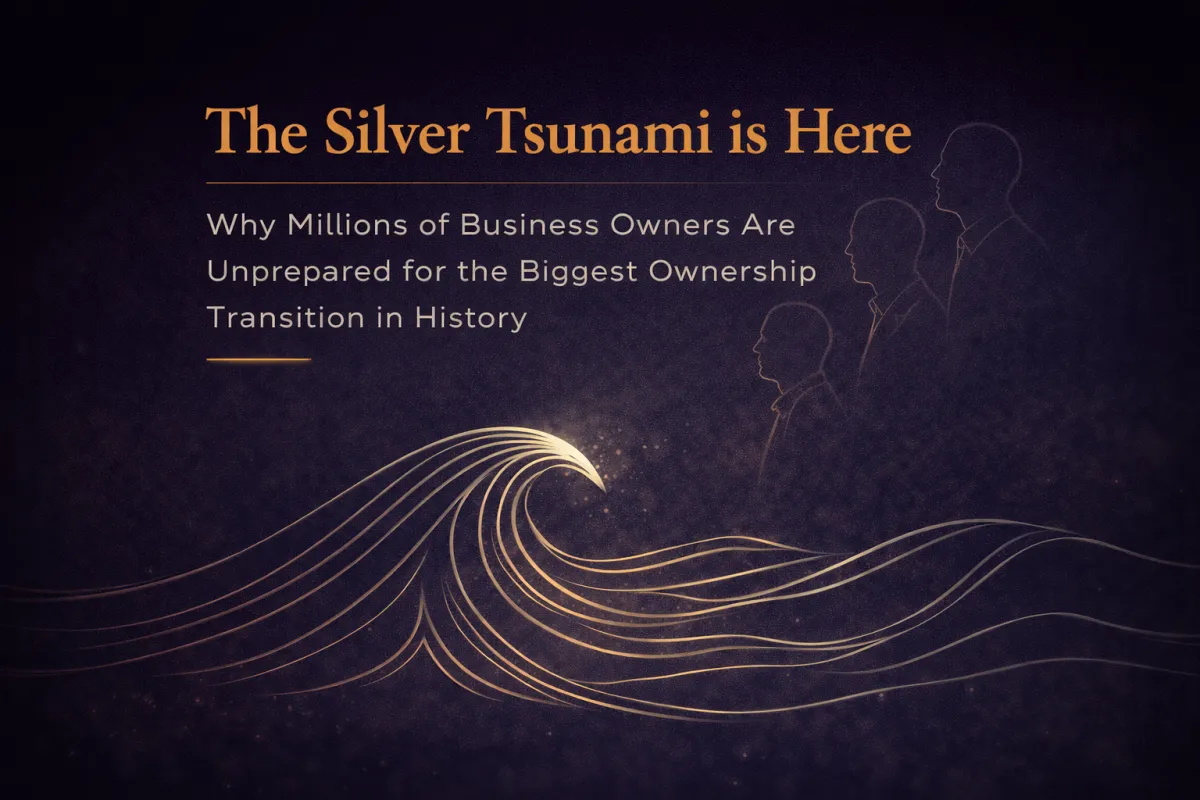
THE SILVER TSUNAMI IS HERE
Why Millions of Business Owners Are Unprepared for the Biggest Ownership Transition in History
A massive shift is underway in the business world.
Over the next decade, millions of privately held companies — primarily owned by
retiring Baby Boomers — will change hands in what’s become known as the Silver
Tsunami.
Estimates suggest that 2.3 to 3 million small and mid-sized businesses in the
United States alone could transition ownership, representing tens of millions of jobs
and trillions of dollars in economic activity.
Yet despite the scale of what’s coming, surveys consistently show that only about half of owners — and in some cases far fewer — have any formal succession or exit
plan in place.
Many are approaching the most financially important moment of their lives unprepared.
The Scale of the Transition Most People Underestimate
Baby Boomers own an enormous share of private businesses — often cited between
40% and 50% nationwide.
These aren’t tiny operations.
Many employ dozens or even hundreds of people and serve as economic anchors in
their communities across:
• manufacturing
• construction
• professional services
• healthcare
• local and regional specialties
The term “silver” reflects aging ownership.
“Tsunami” reflects what happens when millions of businesses hit the market around the same time.
Too many sellers.
Not enough prepared buyers.
The result often includes:
• compressed valuations
• rushed exits
• unstable transitions
• lost jobs
• disrupted communities
Weak or owner-dependent businesses struggle.
That difference almost always starts with strong margins and operational clarity — the foundation discussed in Revenue Is Vanity. Profit Is Power. Why Most Growing Businesses Still Struggle (And How to Fix It).
For many owners, the business meant to fund retirement ends up delivering far less
than expected.
Why So Many Owners Put Off Planning
This isn’t laziness.
It’s human.
Identity Is Tied to the Business
For many founders, the company isn’t just what they own — it’s who they are.
Letting go forces a deeper question:
If I’m not running this, who am I?
Family Dynamics Complicate Everything
In family-run companies, succession decisions can trigger conflict.
Who takes over?
Who gets what?
What if no one is capable — or interested?
“Five More Years” Optimism
Many owners assume they have plenty of time.
Health changes.
Economic shifts.
Burnout arrives faster than expected.
Transitions often happen sooner — and under pressure.
Lack of Transition Expertise
Building a great business doesn’t automatically prepare someone for:
• valuations
• deal structures
• leadership handoffs
• tax strategy
• buyer readiness
Pride and busyness keep many from seeking guidance until options shrink.
The High Cost of Waiting
When planning is delayed, problems compound quickly.
Businesses experience:
• key employee departures
• customer uncertainty
• stalled decision-making
• family disputes
• forced fire-sale exits
Employees lose stability and careers they built.
Communities lose cornerstone businesses.
And owners frequently realize too late that their retirement depends on a sale that falls far short of expectations.
What Real Preparation Actually Looks Like
Strong transitions aren’t rushed.
They’re built intentionally — usually three to five years (or more) in advance.
It starts with honest assessment:
• What is the business worth without you?
• Could it operate smoothly if you stepped away for months?
• Are systems documented — or living in your head?
From there, successful owners:
✔ build leadership teams that can run independently
✔ reduce owner dependency
✔ strengthen financial clarity and transparency
✔ clean up contracts and processes
✔ install scalable systems buyers trust
Many of the fastest improvements come from uncovering hidden profit already inside the business — the exact opportunities outlined in Where the Money Is Hiding. The Overlooked Profit Levers Inside Almost Every Growing Business.
They also explore the full range of transition options:
• family succession
• management or employee buyouts
• strategic buyers
• private equity
• employee ownership structures
Each path carries different financial, tax, and legacy implications.
The Stewardship Shift That Changes Everything
The biggest transition isn’t operational.
It’s mental.
Great founders eventually move from being indispensable operators to thoughtful
stewards.
Your legacy isn’t just what you built.
It’s what continues to thrive after you step away.
Strong leadership is measured by what grows beyond you.
The Wave Has Already Started
The Silver Tsunami isn’t a future event.
It’s happening now.
Every year of delay:
• limits options
• increases risk
• compresses value
If you’re in your 50s, 60s, or beyond, ask yourself:
What would happen if I couldn’t show up tomorrow?
If that question feels uncomfortable, it’s time to begin preparing.
The encouraging truth is that it’s rarely too late to improve readiness.
The dangerous assumption is that waiting makes it easier.
Final Thought
The wave is here.
Some owners will ride it with clarity, strong valuations, and smooth transitions.
Others will be caught unprepared.
The difference is planning — starting sooner rather than later.
And it’s one of the most important financial decisions you’ll ever make.
Transition readiness requires preparation long before timing forces a decision.
The Profit Architecture Framework will design your business to produce durable profit scalable growth and be exit ready.
Schedule a 15-Minute Strategy Conversation and let’s take a closer look at how to strengthen your position now.
A focused 15-minute conversation for founder-led companies ready to strengthen margins, structure, and long-term value.
Multiply Profit. Increase Business Value. Build a Stronger Exit.
Copyright © 2026 Beard Wise Consulting, LLC. All rights reserved
DISCLAIMER
The information contained on this website and the resources available for download through this website is not intended as, and shall not be understood or construed as, professional advice. While the employees and/or owners of the Company are professionals and the information provided on this Website relates to issues within the Company’s area of professionalism, the information contained on this Website is not a substitute for advice from a professional who is aware of the facts and circumstances of your individual situation. Nothing on this site, nor advice from our experts, shall constitute legal advice.